I asked some friends a question recently: "If you could choose one thing that should never be taxed, what would it be?"
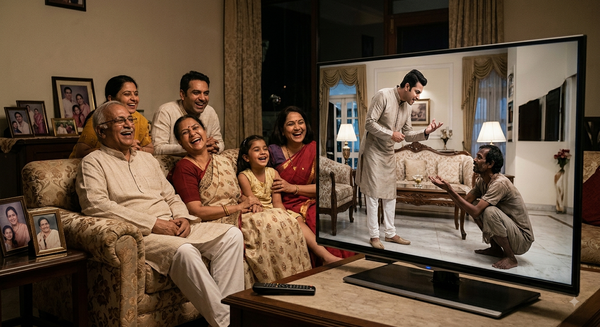
Salary. Income tax, said another, apparently not seeing the irony. Food. And then someone flipped it: "Something that should be taxed? Female drivers."
The room laughed. I laughed too, that quick reflex we use to keep a room comfortable. Later, I sat with what I actually wanted to say.
A hundred years ago, not ancient history, a hundred years ago, there were women in what is now Kerala who would have answered differently. They would have said: the right to cover my own body.
Travancore, early 19th century. The Mulakkaram was a poll tax levied on lower-caste women, the Nadars and Ezhavas. Communities placed at the bottom of a hierarchy so rigid that Swami Vivekananda once called the kingdom a "lunatic asylum." What you could wear, where you could walk, how loud you could speak, all of it was determined by the accident of your birth. Covering the body above the waist was not clothing. It was a caste privilege. A uniform of superiority, worn only by those above. Lower-caste women were not allowed to wear upper garments in public at all until 1859.
They were not being policed for modesty. They were being punished for claiming it.
Here is the irony that demands our silence: we live in a society consumed by how much a woman covers. Short skirts. Bare shoulders. The cultural anxiety of her skin. Yet a century ago, the violence was inverted. The system didn't care about the fabric. It cared about the boundary. Who is allowed to draw a line around their own body, and who belongs to the public eye.
Then there is Nangeli.
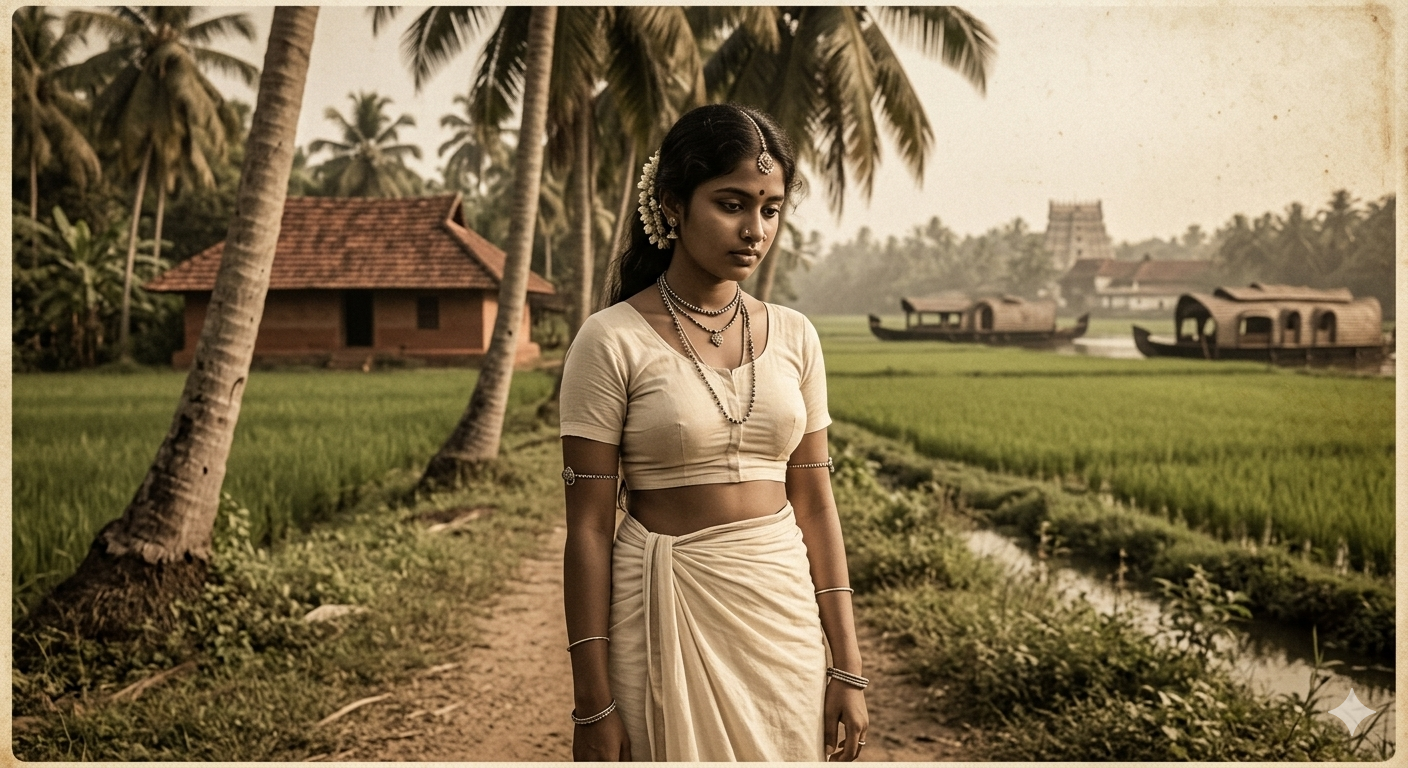
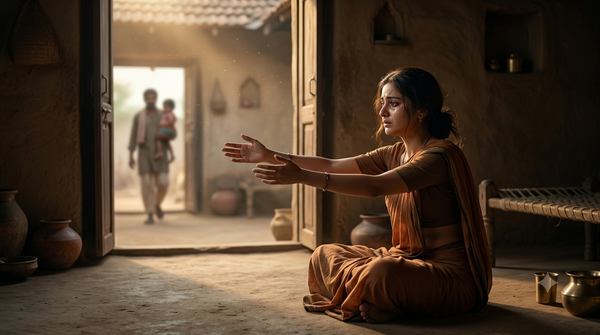
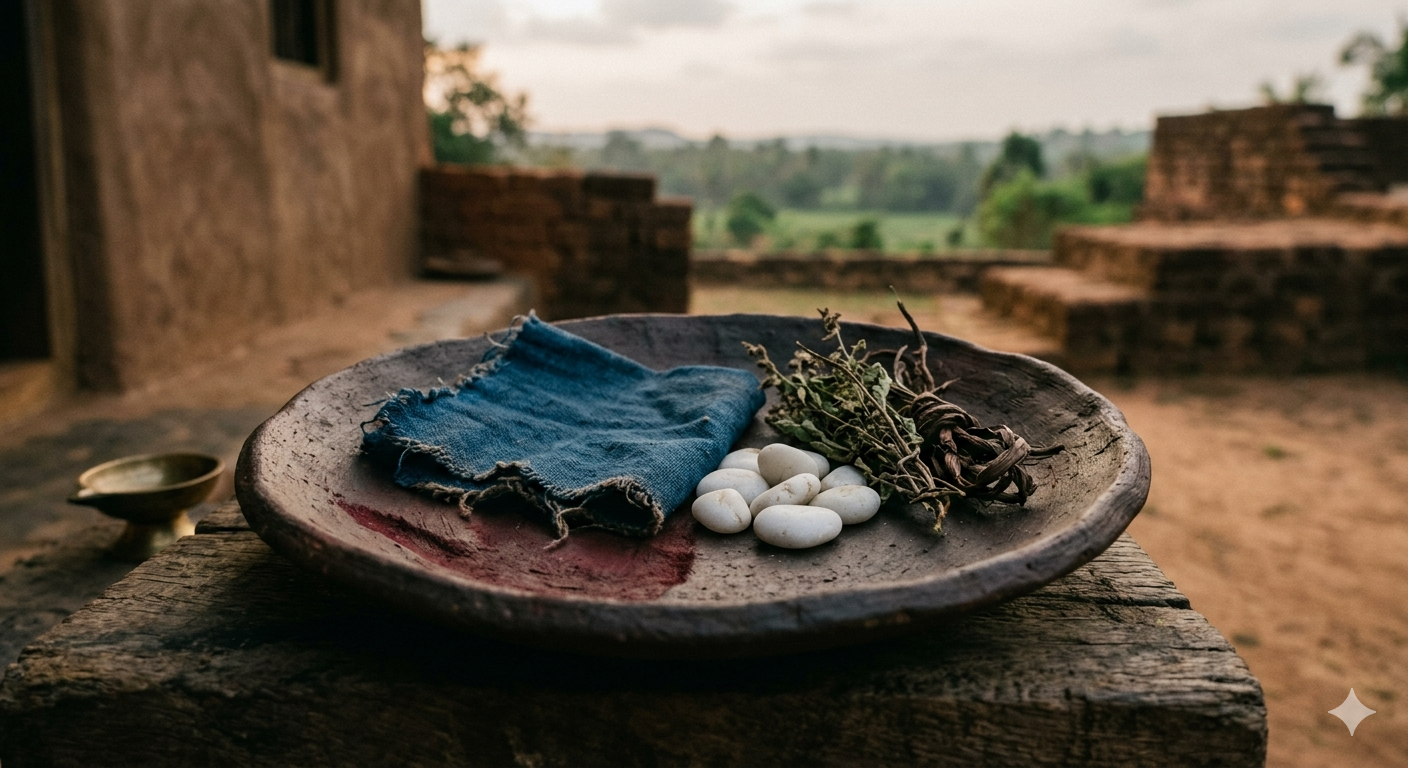
She lived, they say, in Cherthala in the early 1800s. An Ezhava woman. When the tax collector came to her door, she didn't offer coins. She walked out into the heat, a plantain leaf in her hands, and placed on it what they had spent years taxing her for. She bled to death on her own doorstep. Her husband, finding her body, walked into her funeral pyre.
Systems of power have never been in the business of documenting the people they destroy.
Historians cannot confirm her with paper. Archives preserve the names of kings, tax collectors, and decrees. They rarely hold the names of lower-caste women who broke the law. Instead, the land remembers. The village still carries a name: Mulachiparambu. The land of the breasted woman.
That name did not name itself.
Whether Nangeli existed as one woman or as the distilled anguish of many, she is not a fabrication. She is a mirror, held up to a world that made dignity something you had to earn, protest, or bleed for.
We complain about our current taxes because they take from our livelihood. It is a financial ledger, impersonal and transactional. But the Mulakkaram was never about revenue. It was about humiliation. It was a tax designed to ensure that every time a woman looked at her own body, she remembered her place. They paid with something no government can refund.
The freedom to wear what you choose did not arrive quietly. It was taken, slowly, at great cost, by women whose names were mostly never written down.
So I will ask you what I asked my friends.
If you could choose one thing that should never be taxed, what would it be?
Take a moment before you answer.
- Manu S. Pillai, The Courtesan, the Mahatma and the Italian Brahmin: Tales from Indian History (Context, Westland, 2019)
- Sabin Iqbal, "The Legend of Nangeli," Open Magazine, August 2020
- V. K. Karthika, "Reimagining History: The Politics of Representation in Nangeli's Tale," Economic and Political Weekly, January 2024
- Robin Jeffrey, "Politics, Women and Well-Being: How Kerala Became a Model" (Macmillan, 1992)